Fields of Mistria Guide: Beginner Tips for New Farmers
A beginner-friendly overview of Fields of Mistria: what the game is, release timeline, and first-week priorities.
Search keyword: fields of mistria guide
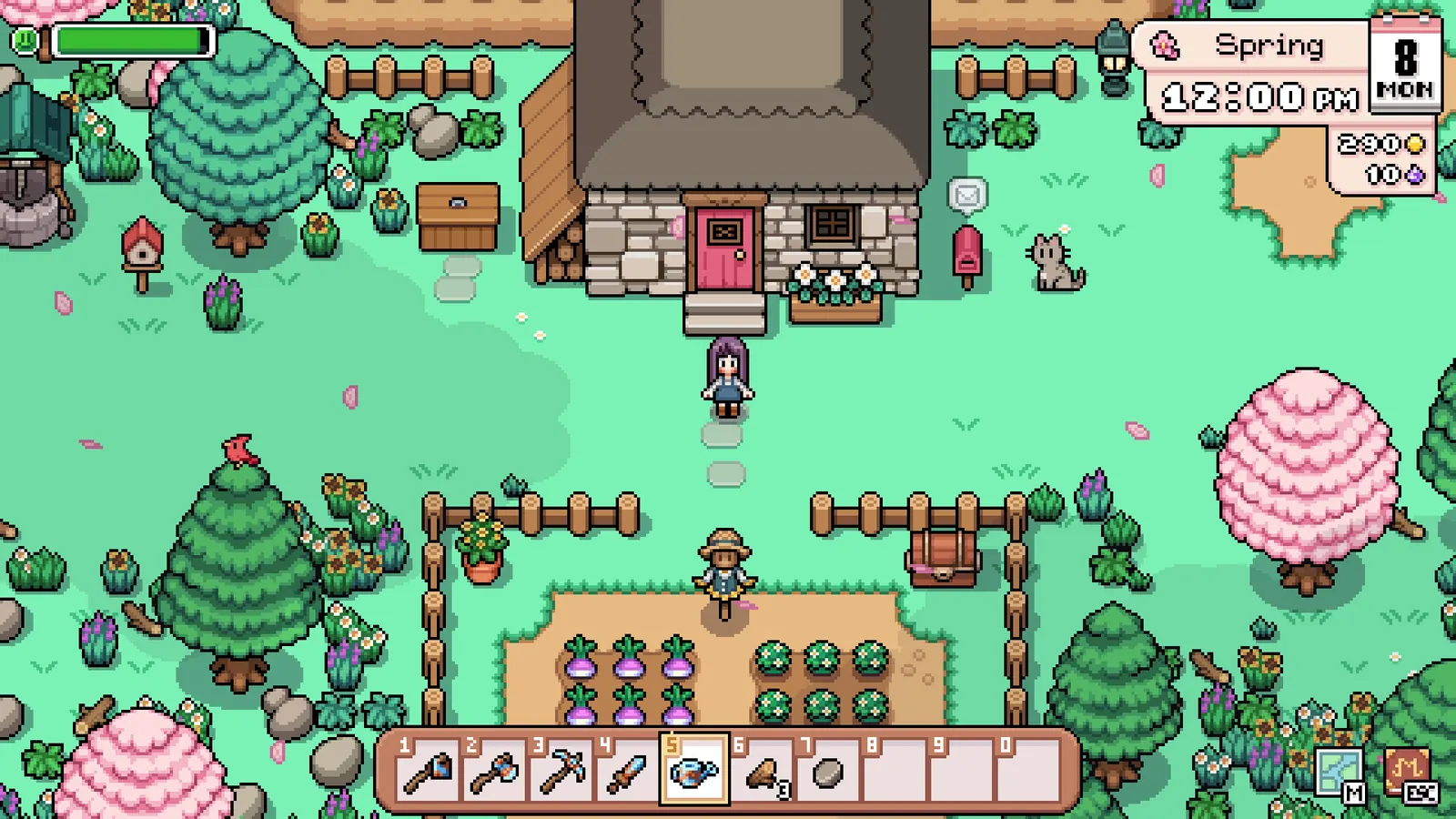
Fields of Mistria is a fantasy farming and life simulation game developed and published by NPC Studio, playable on PC through Steam and GOG. You play as a fully customizable Farmer who inherits a dilapidated old farm — and a mysterious magical past — while helping the town of Mistria recover from a devastating earthquake. This Fields of Mistria guide covers everything a new player needs first: clearing the farm, upgrading tools, planting seasonal crops, fishing, mining, crafting, and building villager relationships, plus community-tested money-making tips.
What Is Fields of Mistria?
Fields of Mistria is a farming and life simulation game for PC that packs farming, fishing, mining, bug catching, monster fighting, cooking, blacksmithing, woodcrafting, and magical spells into one engaging story. The demo was released on June 5, 2024, Early Access launched on Steam on August 5, 2024, and the full version 1.0.0 release arrived on August 15, 2025. A v1.1 update followed on December 9, 2025.
Progression revolves around your farm, quests, Town Rank, and a museum with Archaeology, Fish, Flora, and Insects wings waiting to be filled. The skill system spans:
- Farming, Fishing, Mining, Combat, Cooking, and Ranching
- Archaeology, Blacksmithing, and Woodcrafting
Magic spells and an Infusion system add a fantasy layer on top of the usual farming-sim loop, and community walkthroughs compare the overall feel to Stardew Valley with a fantasy twist.
Getting Started on Your New Farm
Character creation comes first: choose your appearance, name, and pronouns using the robust character creator. After a short introduction to the story, you arrive on the farm your late grandparent left you, according to community walkthroughs. The land is cluttered with rocks, branches, and weeds, so your opening hours are about clearing debris to make room for crops and future structures.
Explore the surrounding areas, meet townsfolk, and let early quests introduce key buildings such as the General Store and The Sleeping Dragon Inn. The game runs on a day cycle with changing weather and four seasons — Spring, Summer, Fall, and Winter — and different crops grow in different seasons, so always check what is in season before planting.
Key Locations Around Mistria
Knowing the map early saves hours of wandering. The wiki organizes the world into distinct regions:
- Town: Balor's Wagon, the Bathhouse, the Blacksmith, Celine's Cottage, the Clinic, the General Store, the Manor House, the Mill, and The Sleeping Dragon Inn
- The Narrows: Errol's Cabin, the Horse Statue, The Mines, and the Museum
- Sweetwater Farm: the Chicken Statue and Hayden's Shop
- The Beach: the Lighthouse and the Tackle Shop
- The Eastern Road: the Carpenter's Shop and the Wishing Well
- Later regions: The Western Ruins, The Summit, and The Deep Woods
Recurring events give each week a rhythm: seasonal Festivals, Friday Night at The Inn, and the Saturday Market. Vendors such as Darcy, Louis, Merri, Taliferro, Vera, and Wheedle keep the town's shops stocked.
Tools and Blacksmith Upgrades
You begin with a few basic tools — a hoe, a watering can, and a scythe — according to the community walkthrough. Tools are upgraded at the Blacksmith in town, and each upgrade makes a tool more efficient and able to work tougher materials. Ores and gems mined in The Mines feed directly into this upgrade loop.
Because you swing the hoe and watering can daily, tool upgrades are among the clearest long-term investments you can make. Sell surplus produce through shipping, save your Tesserae, and schedule upgrades between seasons rather than in the middle of a harvest push.
Farming Basics and Seasonal Crops
Farming is the main source of income in Fields of Mistria. The loop is simple: till soil with your hoe, plant seeds, water every day, and harvest fully grown crops to sell for a profit. Seeds can be purchased from the General Store in town or found in treasure chests in the mines, so mine loot and farm expansion reinforce each other.
Two community tips stand out for new farmers:
- Sprinklers can reportedly be crafted earlier than most players expect, which cuts daily watering labor dramatically.
- Several crafting recipes — the scarecrow among them — can simply be bought from Darcy at the General Store instead of hunted for in mine chests.
Ranching complements crops once you expand: barn animals (Alpaca, Cow, Horse, Sheep) and coop animals (Capybara, Chicken, Duck, Rabbit) round out farm life, alongside animal products and cosmetics.
Fishing and Mining
Fishing requires a fishing rod, which community walkthroughs say is obtained from the Tackle Shop on The Beach. With a rod in hand, cast into any body of water; when a fish bites, reel it in by pressing the action button at the right time. Different fish appear in different locations and seasons, and your catches feed the museum's Fish Wing — legendary fish are long-term goals that players celebrate.
The Mines sit in The Narrows, which one community walkthrough describes as north of town (unconfirmed), and descend through the Upper Mines, Tide Caverns, Deep Earth, and Lava Caves. Ores and gems inside power crafting and tool upgrades, with better materials appearing the deeper you go. Monsters attack on sight and grow tougher at depth, so bring restorative food. One community report even suggests ignoring the mines until summer, after which treasure chests are stuffed with hundreds of ore, wood, and stone.
Crafting and Recipes
Crafting covers furniture, decorations, and tools, all produced at crafting stations found around town or crafted and placed on your farm. Recipes come from two main sources: treasure chests hidden in the mines, and vendors in town who sell a selection of them. Community players specifically highlight that recipes like the scarecrow are purchasable from Darcy, so always browse shop stock before grinding the mines for one specific recipe.
Bug catching and gathering forageables supply additional materials, while artifacts recovered through Archaeology head to the museum. Woodcrafting and Blacksmithing round out the production skills, turning raw materials into furniture, equipment, weapons, and cosmetics.
Villagers, Friendship, and Marriage
Building relationships with villagers is a core system, not a side activity. Talk to villagers and give them gifts; each villager has their own likes and dislikes, so watch how they react. As relationships rise, you unlock new dialogues and events, and some villagers can be romanced and eventually married.
The marriage candidates split into two groups:
- Bachelorettes: Adeline, Celine, Juniper, Reina, and Valen
- Bachelors: Balor, Eiland, Hayden, March, and Ryis
Beyond the candidates, townsfolk such as Dell, Dozy, Elsie, Errol, Hemlock, Holt, Henrietta, Josephine, Landen, Luc, Maple, Nora, Olric, and Terithia fill out the town, with special characters like Caldarus and the Priestess tied to the story. Gift wisely, and everyone from the Saturday Market crowd to the regulars at The Inn will warm up to you over time.
Money-Making Tips from the Community
Community reports highlight several proven income strategies worth copying:
- One player reported making 80,000 Tesserae from tomato and blueberry wine in two days, making processed goods like wine a standout strategy once crops are flowing.
- A year-three player dubbed catfish a money printer, pointing to fishing as a reliable long-term earner.
- Players also share money-making tricks built around the Chicken Statue at Sweetwater Farm.
- Museum completion is genuinely achievable — players have posted finished museums as proof there is hope for completionists.
Balance these against tool upgrades and recipe purchases, since early spending on efficiency keeps paying off every season.
Sources
- https://fieldsofmistria.wiki.gg/
- https://www.reddit.com/r/FieldsOfMistriaGame/comments/1eml8bc/fields_of_mistria_walkthrough_marked_spoiler_for/